

Resources
/
Fossil fuels don’t just burn the planet – they fuel genocide
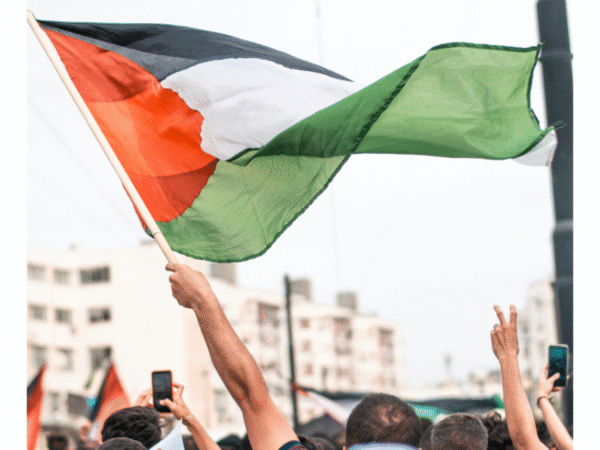
Fossil fuels don’t just burn the planet – they fuel genocide
28/04/2026

Worldwide
The Arhuaco, Kogui, Wiwa and Kankuamo peoples, ancestral custodians of the Sierra Nevada de Santa Marta, call their territory the heart of the world. This week, at its foot, the city of Santa Marta hosts the First International Conference on Transitioning Away from Fossil Fuels. The choice of venue is not an accident: Santa Marta is one of Colombia’s main coal export hubs, which makes this space at once a living contradiction and an extraordinary political opportunity.
The conference was born out of failure. At COP30, a coalition of around 80 countries backed a global roadmap to phase out fossil fuels and was blocked by an opposing bloc led by petrostates including Saudi Arabia and Russia. Colombia and the Netherlands responded by convening this summit outside the traditional UN climate architecture, in a direct acknowledgement of what multilateral negotiations have consistently refused to name: that fossil fuels are not a policy variable to be managed, but the root cause of the crisis. That’s a good diagnosis, but it doesn’t go nearly far enough.
The climate justice, the antimilitarist and the Palestine solidarity movements, among others, have long made visible something that climate diplomacy has never managed to say out loud: the fossil fuel industry and the military machine are not parallel crises. They are the same crisis: they share infrastructure, supply chains, and the legal frameworks that keep both industries unaccountable and, most importantly, they share victims. This is not just another metaphor. It’s a supply chain, with names, extraction sites, ports, and shipping contracts.
For the past two years, Israel has systematically destroyed everything that sustains life in Palestine, especially in the Gaza Strip, from hospitals to schools, water systems or power grids. To kill over 80,000 people, to demolish 80% of Gaza’s infrastructure, to maintain the AI-powered surveillance system that kills at the click of a button, Israel needs energy. And that energy is provided by other states, transported by private companies, and protected by the same trade frameworks that will be under discussion in Santa Marta this week. The United States is the sole supplier of JP-8, the specialised military aviation fuel, powering the aircraft that have bombed Gaza without pause.
Azerbaijan, via the Baku-Tbilisi-Ceyhan pipeline, and Kazakhstan supply around 70% of Israel’s crude oil, shipped through Turkish ports by Greek tanker companies whose vessels disable their tracking systems and falsify their destinations to circumvent Turkey’s own trade embargo. Between October 2023 and February 2026, eight covert coal deliveries totalling 751,000 tonnes were shipped from South Africa’s Richards Bay terminal to Israel on Greek-managed vessels, part of a broader supply chain documented by the Palestinian Institute for Climate Strategy and Disrupt Power, which tracked over 6.6 million tonnes of thermal coal reaching Israel from Colombia, South Africa and Russia since October 2023. That coal feeds the power stations supplying Israel’s military command centres, its logistics infrastructure, and the illegal settlements connected to the national grid.
These resources did not arrive by magic. Greek shipping dynasties Kyklades and Thenamaris account for 95% of the covert crude oil transfers from Turkey to Israel since the embargo, vessels that disable their trackers, report false destinations, and reappear days later having offloaded in Ashdod. The same Greek shipping world is implicated in at least 13 shipments of ammunition and military components to Elbit Systems, Israel’s largest arms manufacturer, ships owned by dynasties that also supply the fuel that powers the aircraft dropping the bombs. They move crude oil, coal, and weapons for death as casually as they move bananas. Colombia’s coal embargo, won by workers and unions, proved that supply chains can be broken. When enforcement closed the Colombian tap, capital adapted: Glencore accelerated exports through South Africa. Richards Bay – Africa’s largest coal export facility – is now the chokepoint.
What enables this is not just a failure of political will. It is a structural legal gap. Fossil fuels are currently traded under the same general commercial frameworks as any other commodity. There is no mandatory scrutiny of who buys them, what they are used for, or what chain of violence they enter when they cross a border. More than 70 organisations gathering in Santa Marta this week are demanding that this change.
The Global Energy Embargo for Palestine is calling for fossil fuels to be regulated as dual-use materials, subject to End-Use Certificates that track the full chain from extraction to final use, including transport. This is nothing new: end-use scrutiny is already standard practice for arms exports. The question nobody seems to want to answer is why it doesn’t apply to the fuel that powers them. The same logic applies to the legal architecture that protects fossil fuel corporations from democratic accountability: the Energy Charter Treaty and Investor-State Dispute Settlement mechanisms have functioned for decades as a guarantee that governments cannot regulate the fossil fuel industry without facing billion-dollar lawsuits. These aren’t technical questions. They’re about whether states are actually willing to prioritise human rights and dignity over corporate profit, or whether that commitment stops at the doors of the fossil fuel industry.
There is a politics that moves faster than diplomacy, and it lives in the hands of workers who have already answered that question. Dockers who refused to unload weapons bound for genocidal Israel. Port workers who slowed, delayed, and disrupted the supply chains that states continued to authorise. These workers put their livelihoods at risk to do what governments had the legal and moral obligation to do first. Legal protection for workers who refuse to handle military cargo or fuel destined for documented atrocities is not a secondary demand: it is the frontline of the accountability from below that conferences like Santa Marta are trying to build from above.
For all these reasons, this conference matters. It is the first multilateral space willing to name the root cause rather than the symptoms. But if it does not reckon with the ways fossil fuels function as weapons not just as carbon but as fuel for genocide, as infrastructure for apartheid and illegal occupation, as the commodity that moves through the same ships that carry ammunition, it will reproduce the same silence that has defined climate diplomacy for decades. A climate movement that ignores militarism, and an antimilitarist movement that ignores fossil fuel supply chains, are each working with half the picture. Palestine has made that impossible to keep ignoring.
We arrive at the heart of the world with hearts on fire, but our flame is not fed by fossil capitalism, which will burn itself out sooner or later. Our flame is fed by the struggle for justice and liberation. And no one can extinguish that.
PARTICIPATE IN THE CHANGE
Everyone can play a role against energy oppression. Disrupting energy flows can be achieved at every node of the supply chain, and by challenging the infrastructure that sustains it. Join workers and communities already taking action. Pressure your bank, your pension fund, your university, your union, your government.
End energy complicity. Energy embargo now.

