

Global Energy
Embargo
for Palestine
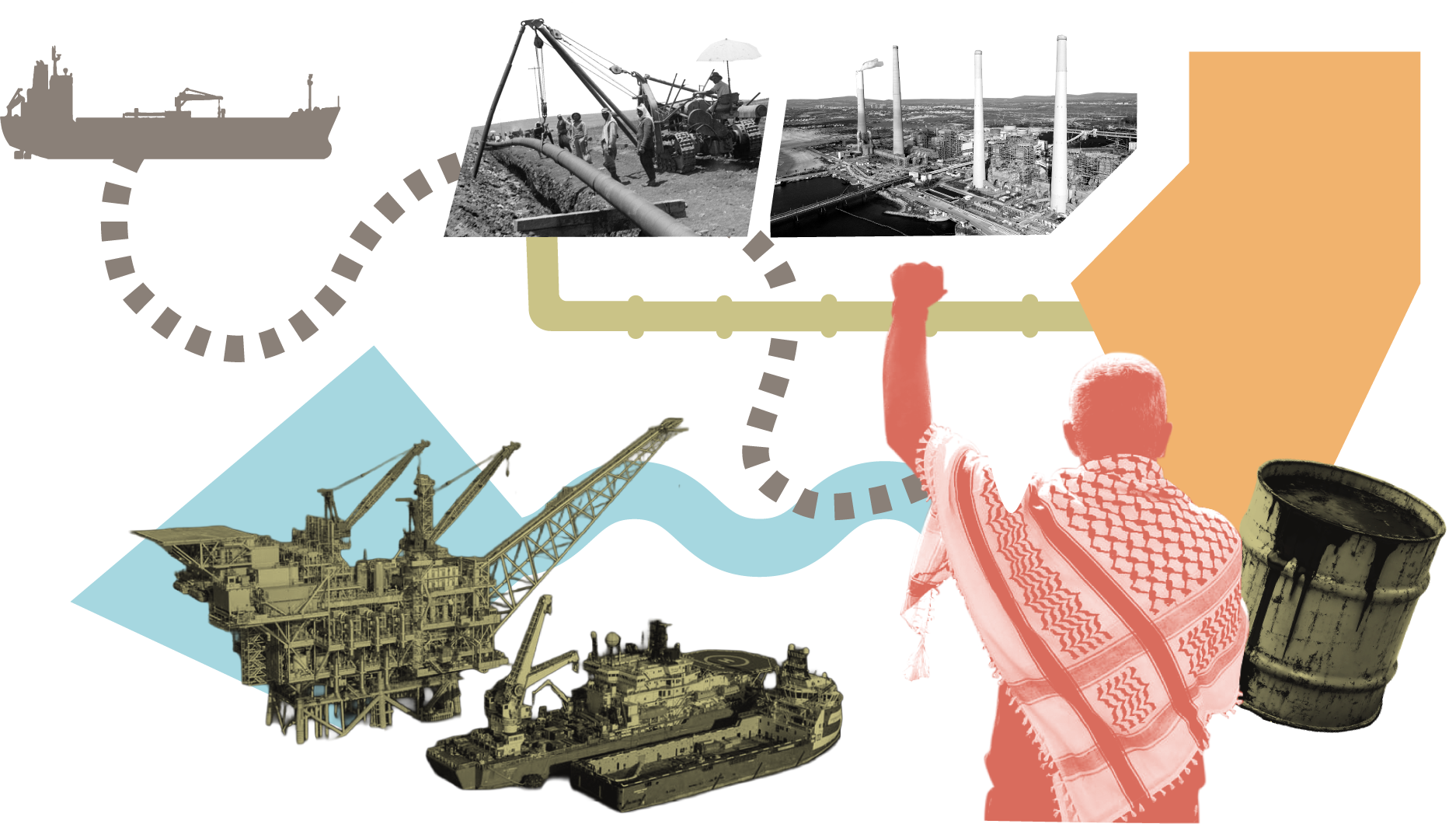

Energy as a tool
for opression
Energy is not neutral. It fuels the genocide.
It is extracted from indigenous lands - disproportionately defended by women and indigenous communities, transported through securitised corridors, sold through corporate networks, and used to oppress people. In Palestine, Venezuela, Cuba, Brazil, Iran, and across the world, energy is wielded as a weapon of mass control; a political system where corporations and states decide who lives and who doesn't.
ARCHITECTURE OF GENOCIDE
The genocide in Palestine reveals the architecture of global energy supplies that corporations profit from and which are institutionalised through the state: legal frameworks, trade regimes and the multilateral system. The structures are organised across national boundaries and reproduced through fragmented labour regimes.

Offshore Gas Infrastructure in the Eastern Mediterranean Sea
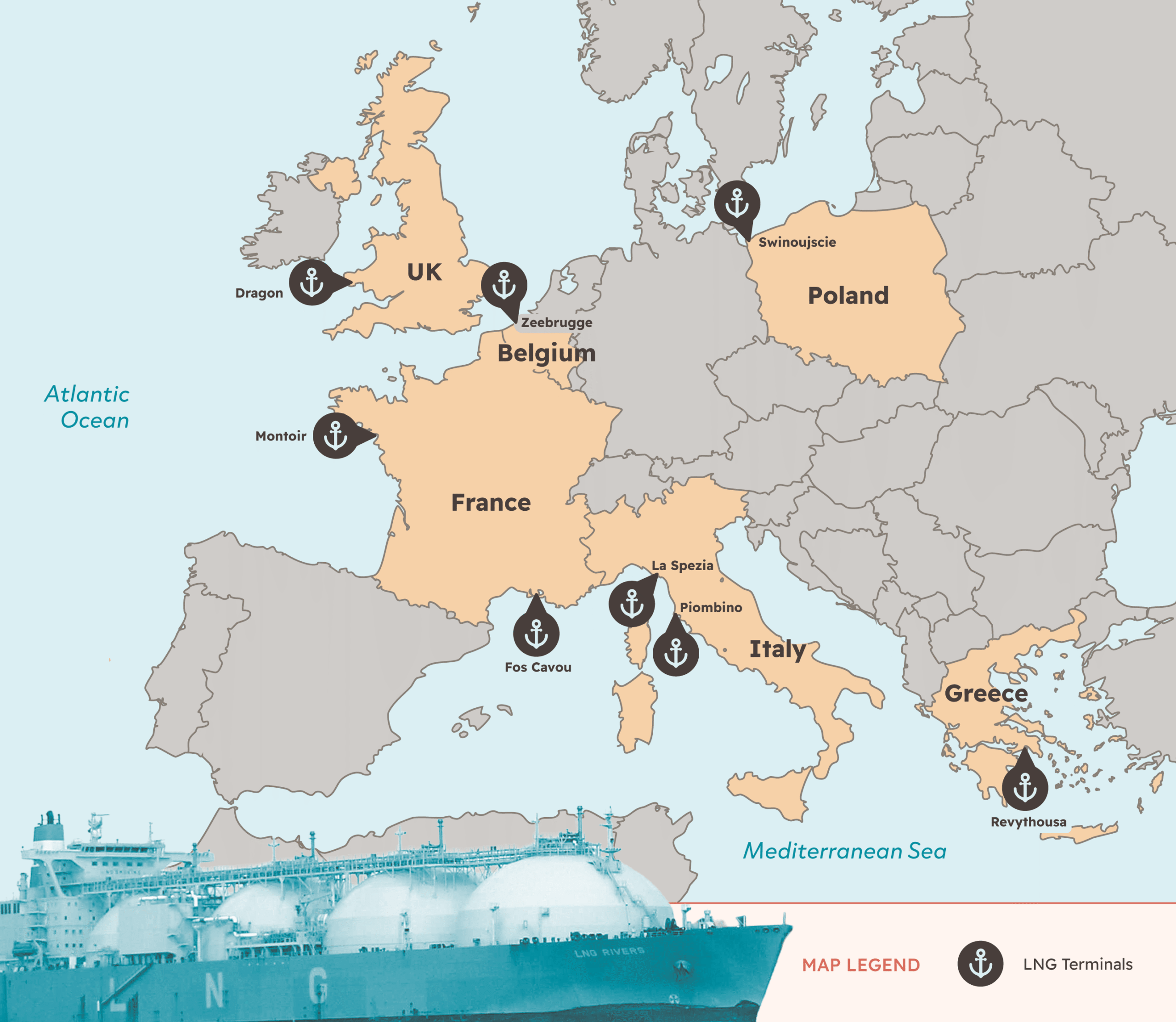
Gas is extracted by the Israeli colonial regime in offshore gas platforms in the Eastern Mediterranean Sea. Some of these are located inside of the declared maritime waters of Palestine and Lebanon. From these gas fields, gas is transported to land-based facilities, where it is liquified and transported on ships to ports in Europe. It is estimated that in the coming years, gas infrastructure will expand, further curtailing Palestinian rights and their energy sovereignty.
Illegal Gas Imports into Europe
Ships transport gas, including stolen Palestinian and Lebanese gas, via Egypt to LNG terminals across Europe, traded under the EU-Egypt-Israel Memorandum of Understanding. The pipeline connecting the gas fields with Egypt crosses Palestinian EEZ without Palestinian consent or financial revenues, making the whole infrastructure and therefore exports illegal. Framing this gas as 'decarbonisation' hides its bloody origins and Europe's growing reliance on companies greenwashing the genocide.
Petroleum Supply Chain from Brazil via the Refining Facility in Sardinia
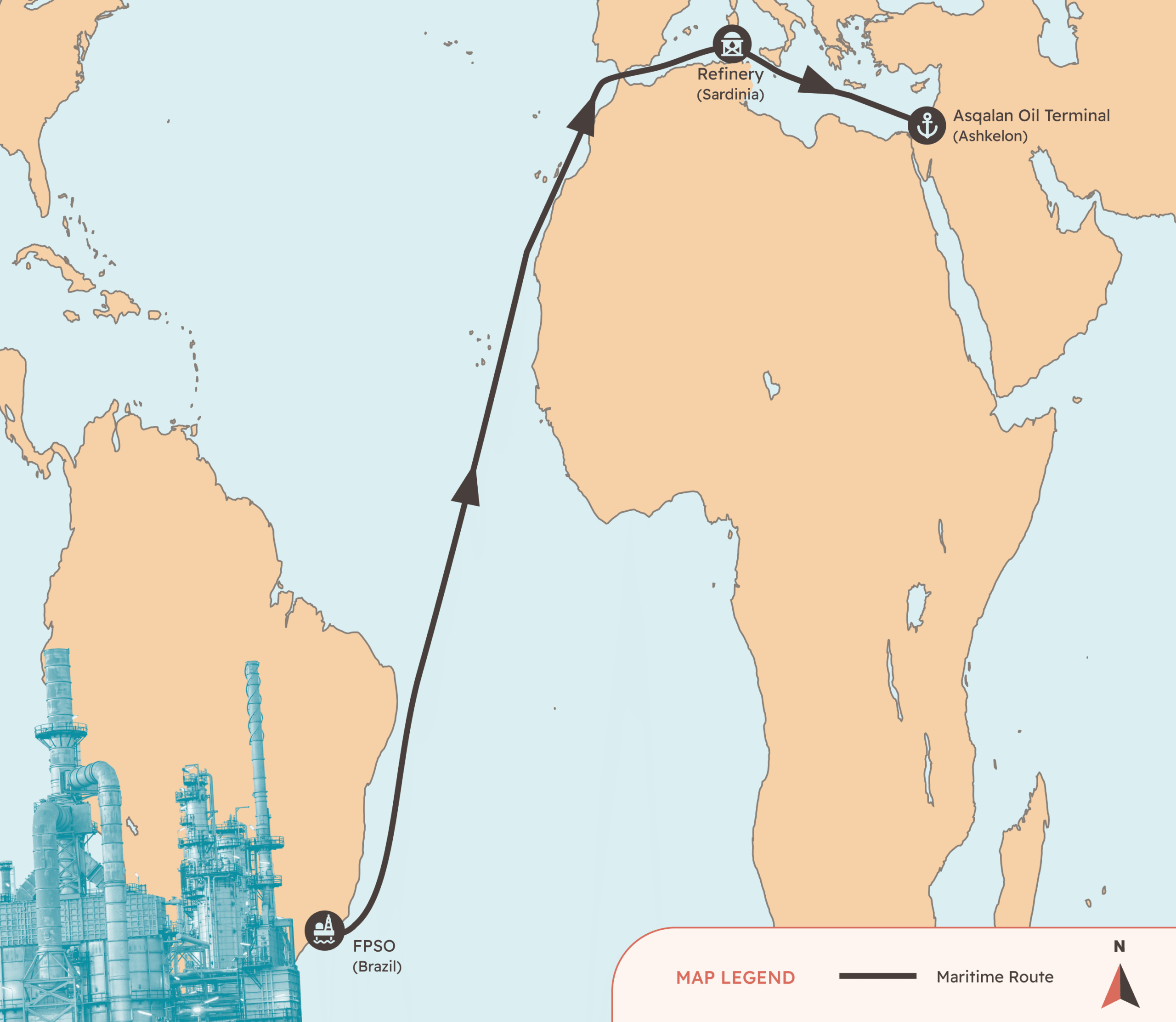
Crude oil from off-shore Brazilian oil fields is extracted on FPSO (Floating Production, Storage, and Offloading) units and shipped to a refinery in Sardinia (Leg 1). Here crude oil is distilled into refined petroleum products, including military-grade aircraft fuel and shipped to Israel (Leg 2). The SARAS refinery in Sardinia is operated by Vitol, the world’s largest commodity trader with a dark history of facilitating the plunder of oil resources.
Coal Supply Route from South Africa
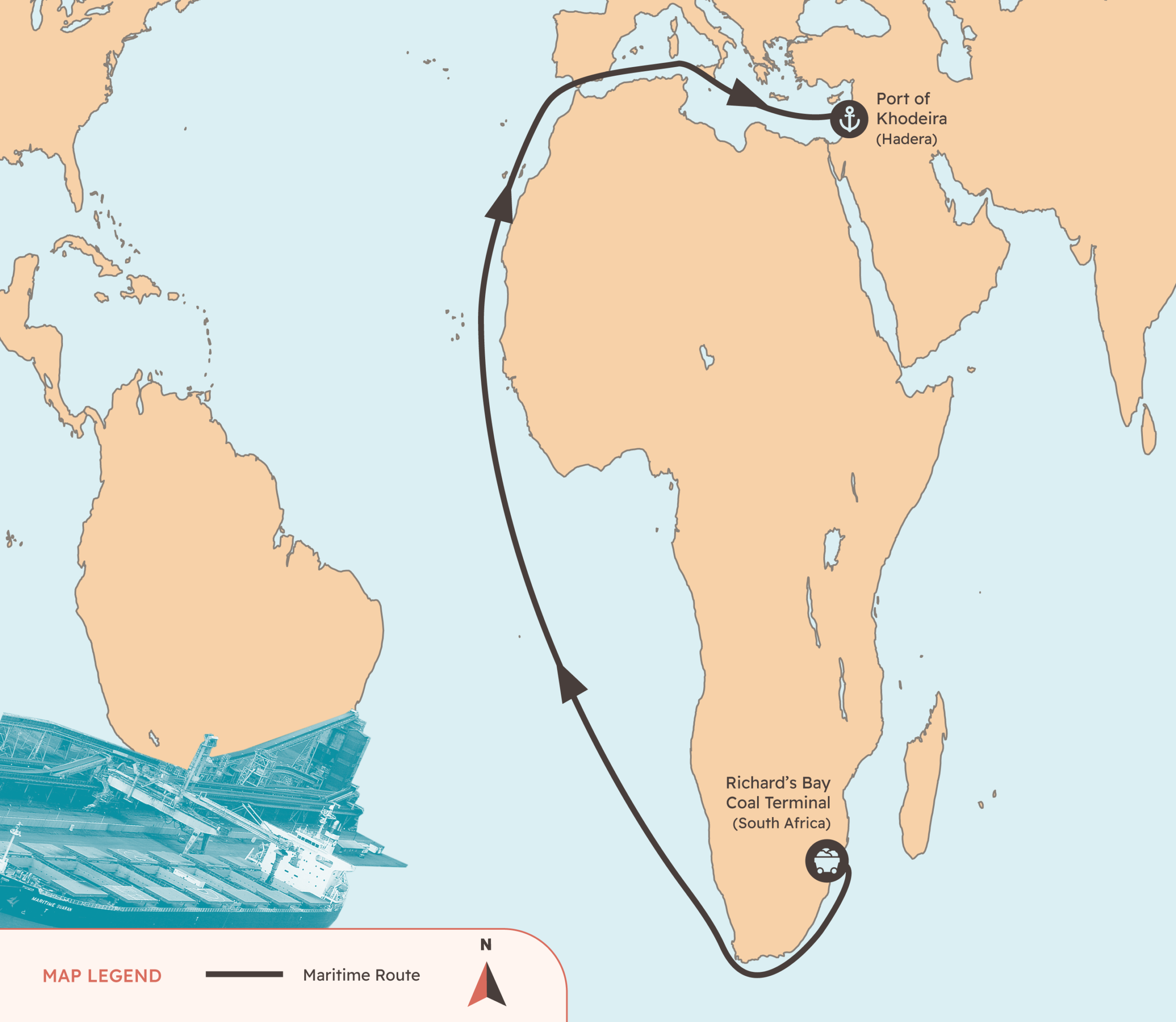
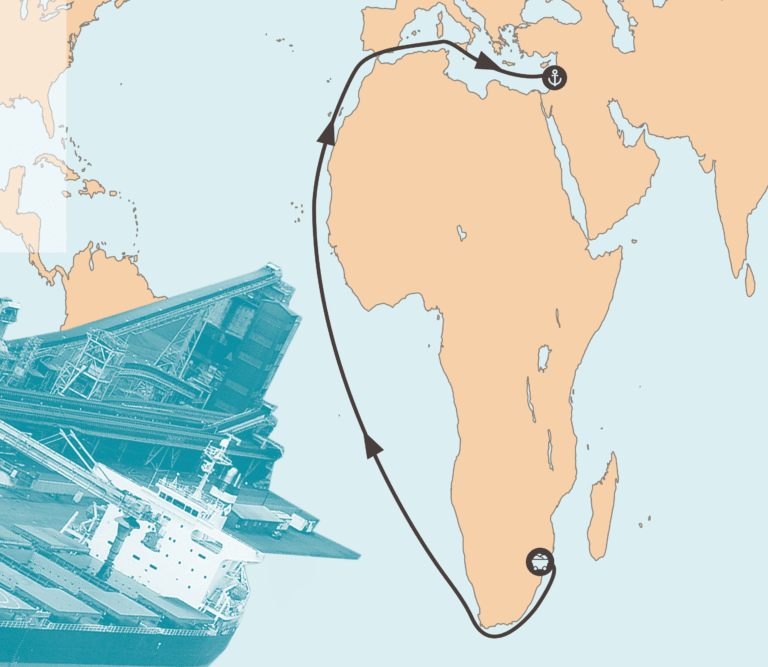
Coal is mined in the Mpumalanga province, as well as parts of KwaZulu-Natal and Limpopo mines in the interior of South Africa. It is transported to the coast via rail freight corridors to the Richard’s Bay Coal Terminal. From here, bulk carrier ships transport the coal to the Israeli port of Khodeira (Hadera) via the Mediterranean Sea. Since the coal embargo in Colombia, South Africa has become the biggest supplier of coal to the Israeli colonial regime.
Military Fuel Supply Route from the United States
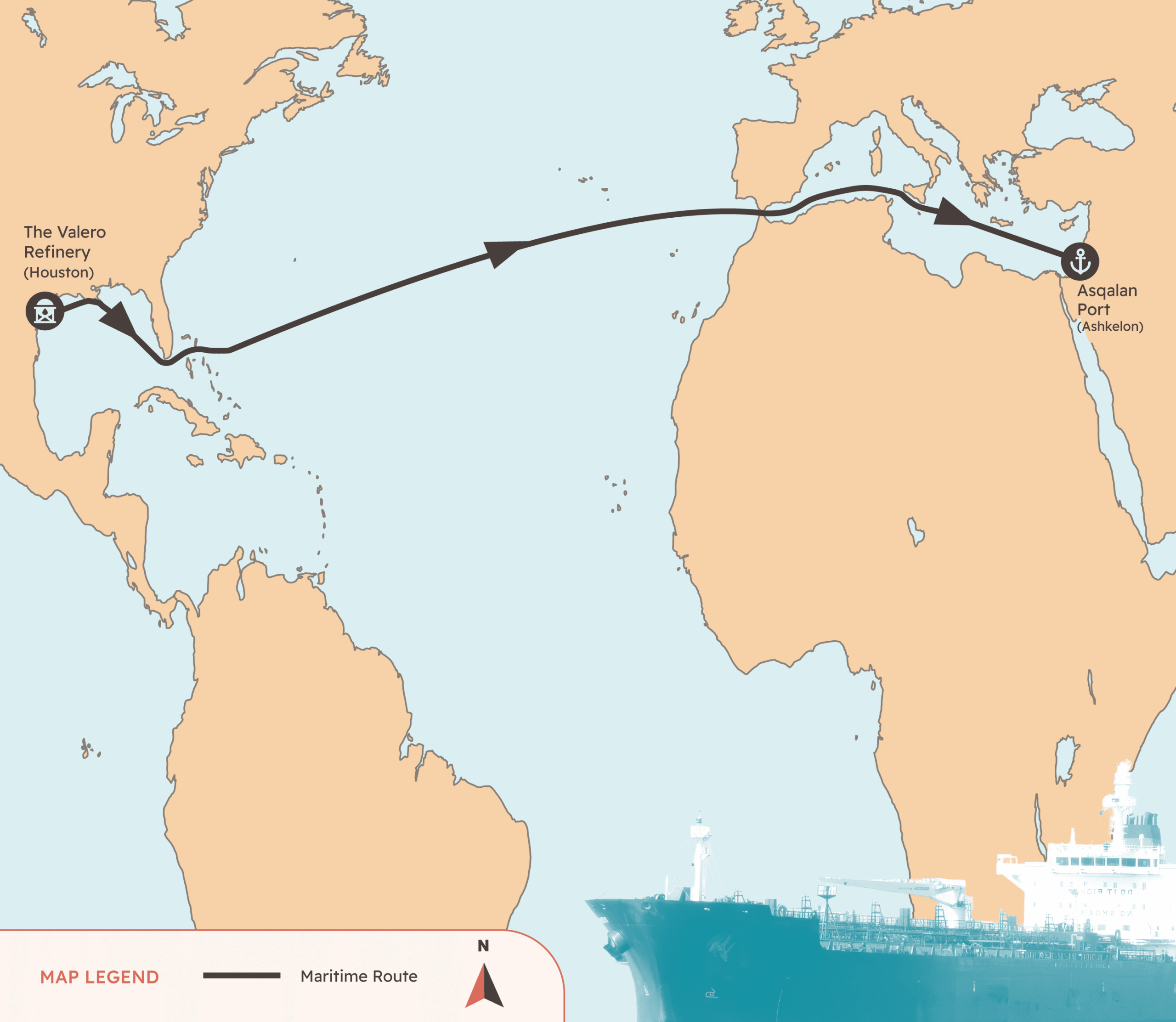
The Valero refinery in Houston has been contracted by the US government to supply aircraft-grade fuel (JP-8) and diesel for military vehicles to the Israeli Occupation Forces. Paid for by American tax-payers, these fuels are shipped on tankers to the port of Asqalan (Ashkelon) in Israel, enabling the bombardment and destruction of Gaza. Valero has also emerged as one of the largest refiners of Venezuelan crude oil since the kidnapping of president Maduro.
The Baku-Tbilisi-Ceyhan Crude Oil Pipeline
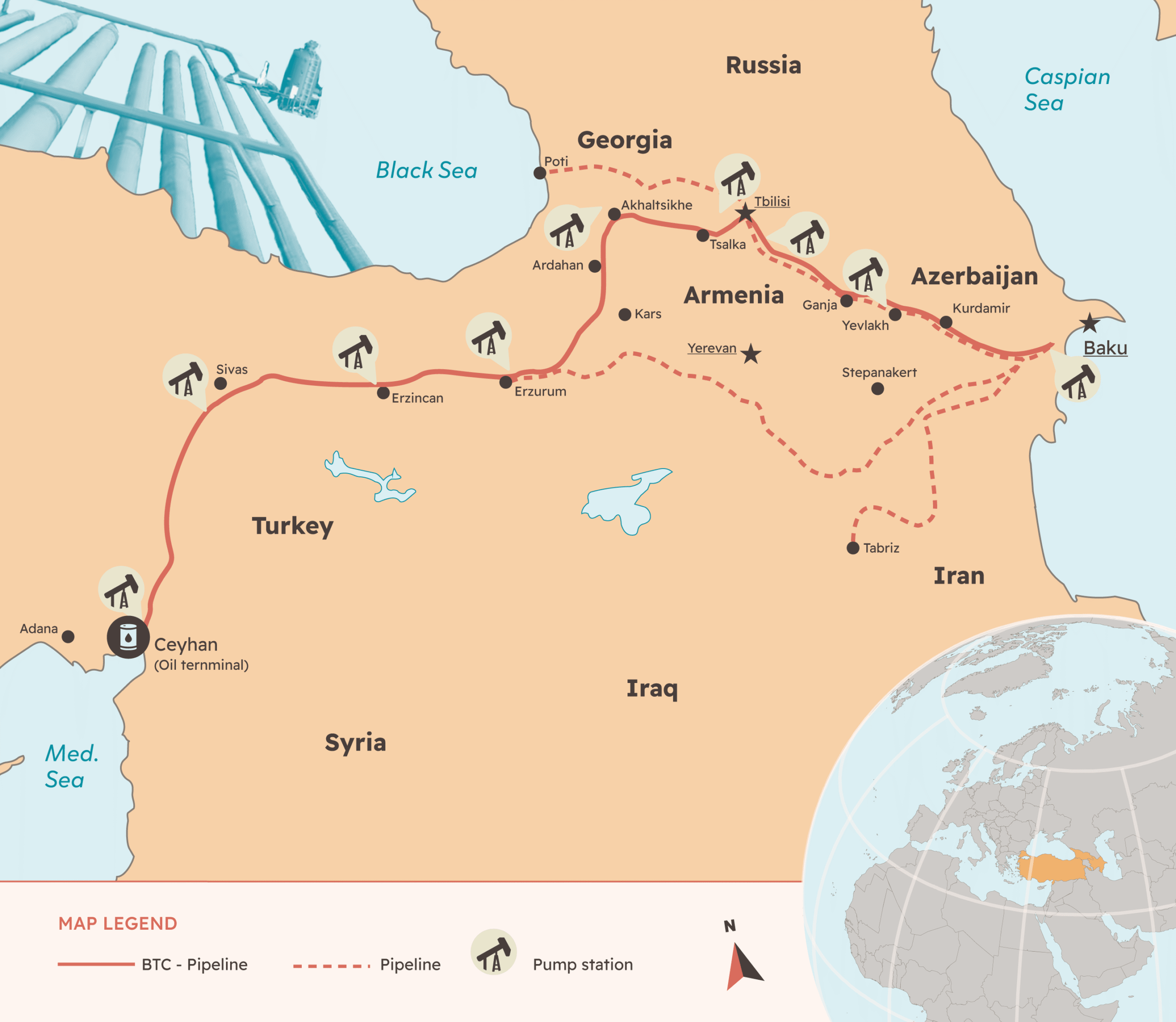
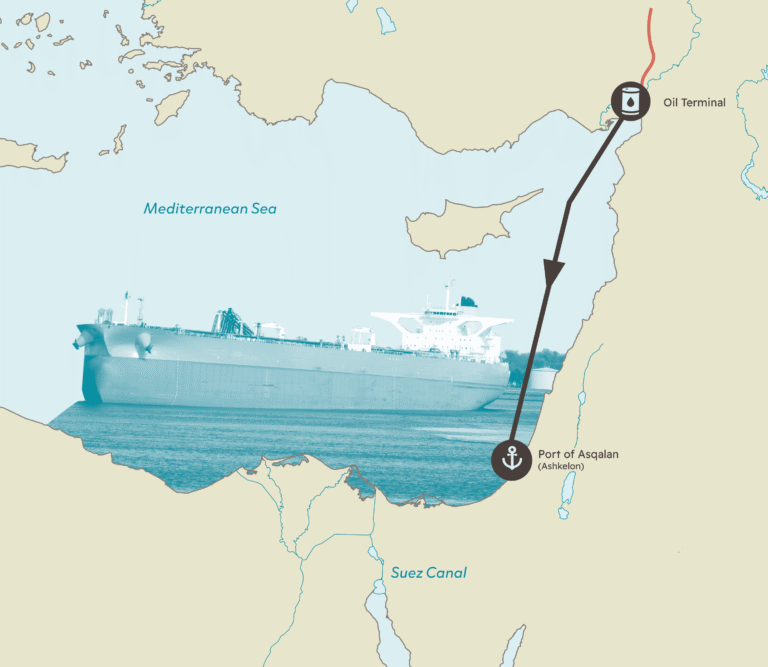
Azerbaijani crude oil is extracted from the Caspian Sea from where it is sent to the Sangachal terminal near Baku. Here the oil flows through the Baku-Tbilisi-Ceyhan pipeline which runs for 1099 miles across Azerbaijan, Georgia and Türkiye, culminating at the port of Ceyhan. Oil tankers make regular runs from the port of Ceyhan to the port of Ashkelon. During this iteration of the genocide, the BTC pipeline is the the largest route of crude oil supplies to the Israeli colonial regime.
Crude Oil Supply Route from Türkiye
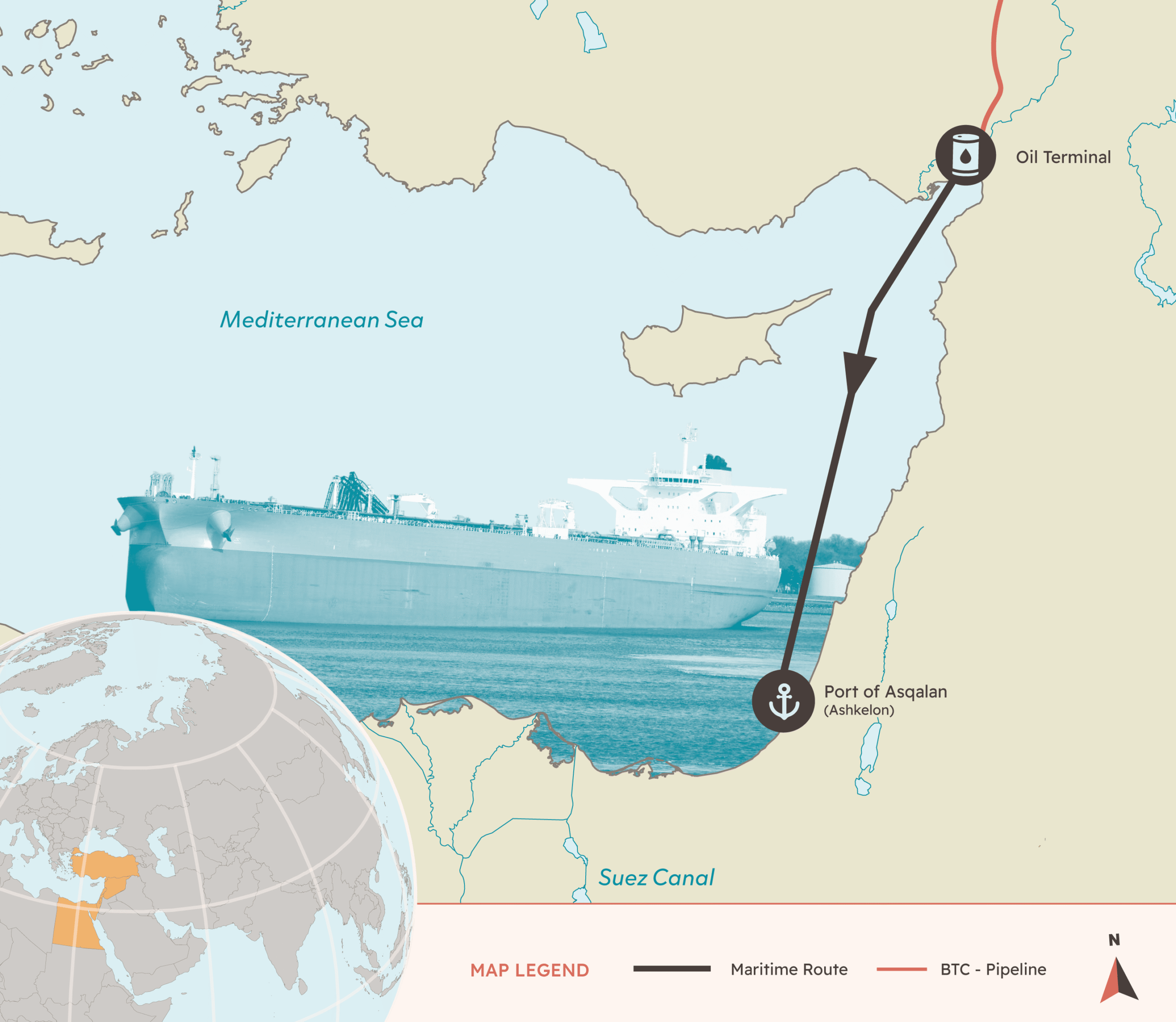
From the port of Ceyhan in Türkiye, oil tankers transport crude oil to the port of Asqalan (Ashkelon) in Israel. Despite an embargo on trade with the Israeli colonial regime being announced by the Turkish government, Greek-owned shipping vessels have deliberately operated in the ‘dark’ as a way to bypass the embargo and keep fueling the genocide.
Coal Supply Route from Colombia
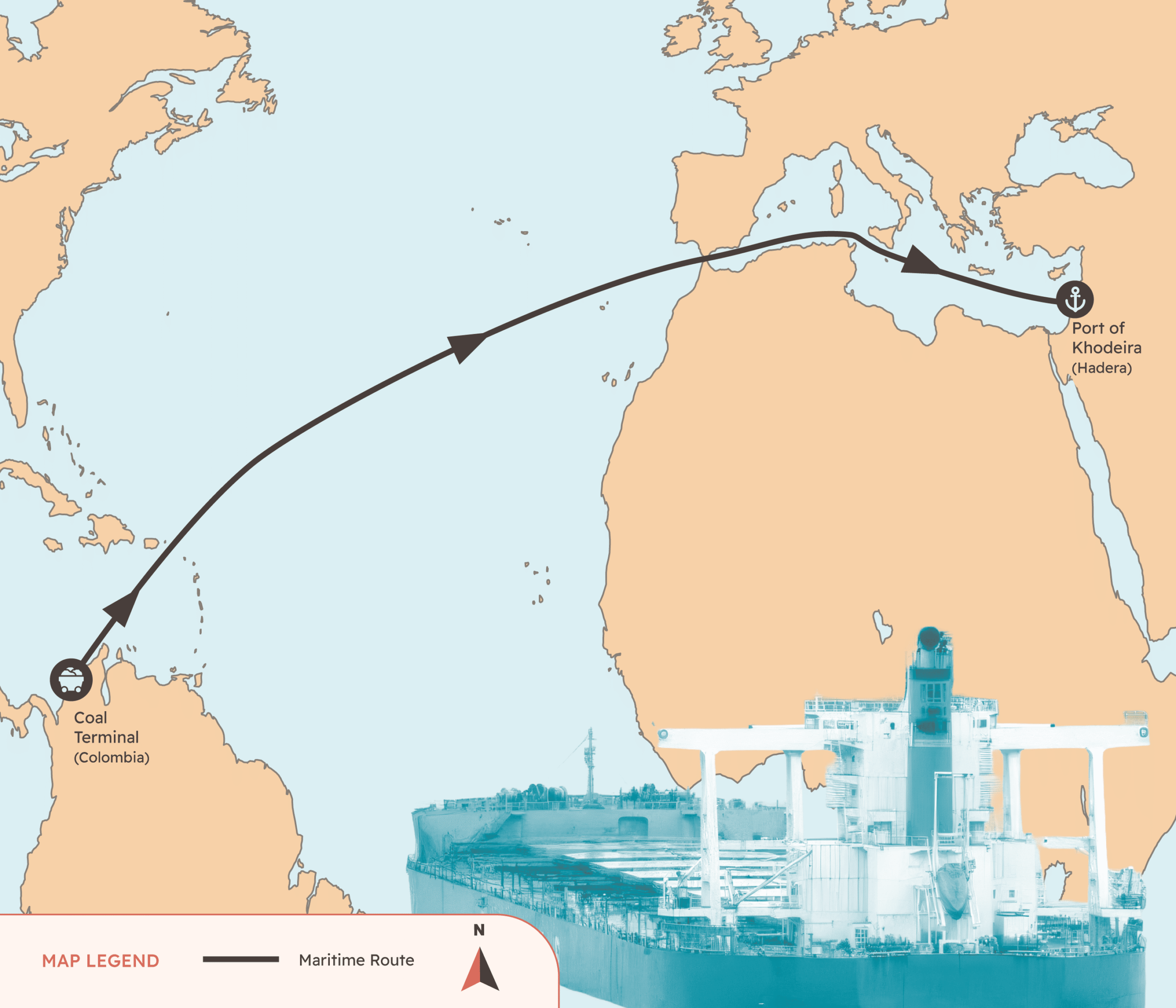
Colombia used to be the largest exporter of coal to Israel, until popular pressures from below by indigenous communities and workers brought into place a coal embargo in 2024. However, with the change of government in 2026, it is expected that the coal trade from Colombia to Israel will resume with ships leaving key coal terminals to deliver cargo via the Mediterranean Sea.
InterconNected
struggles
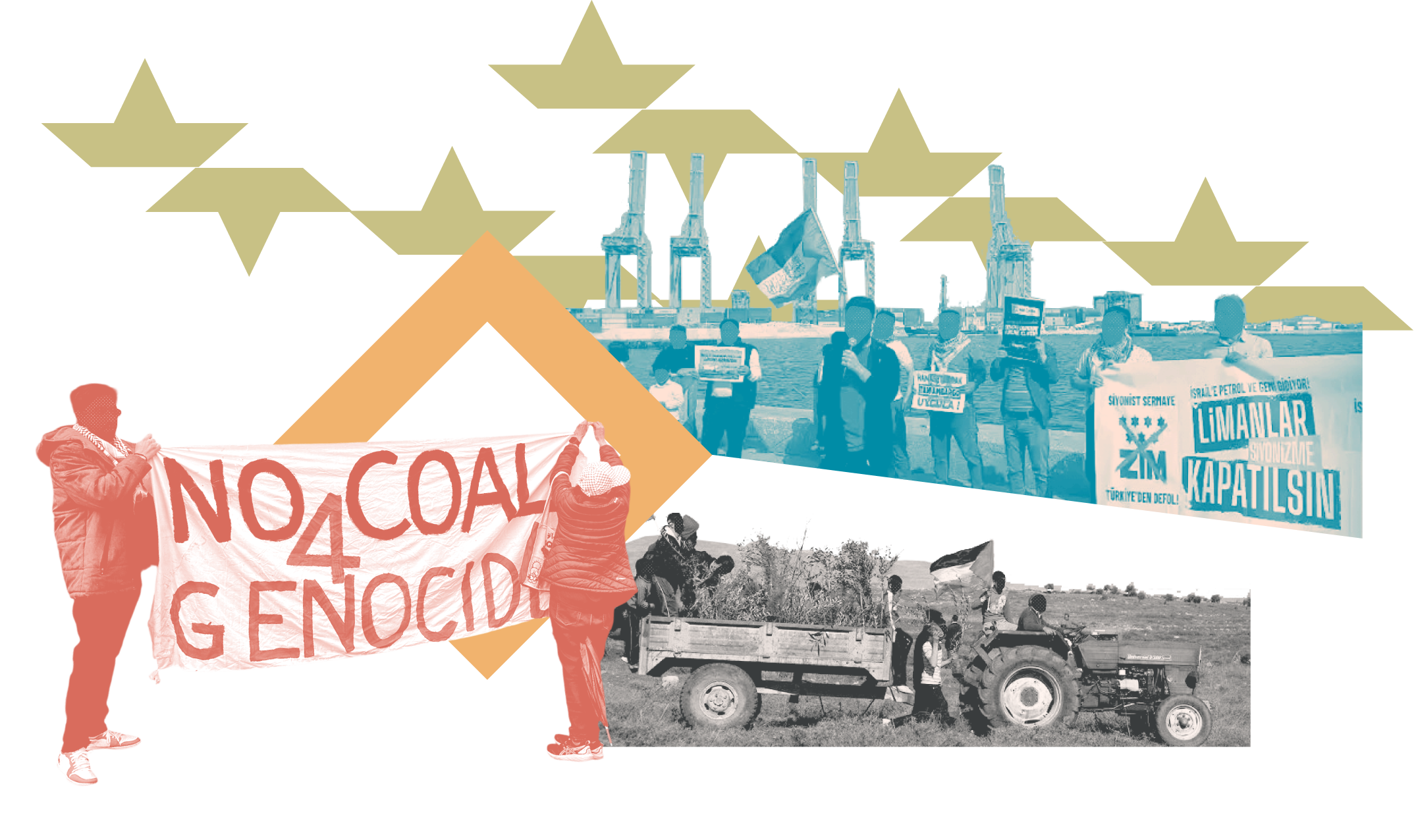
GEEP connects the struggles the system works hard to keep separate:
Palestinian liberation, climate justice, workers' rights, anti-militarism, into one fight against one system. No climate justice without Palestinian liberation. The energy flows sustaining the military-industrial machine can and must be disrupted.
Building power
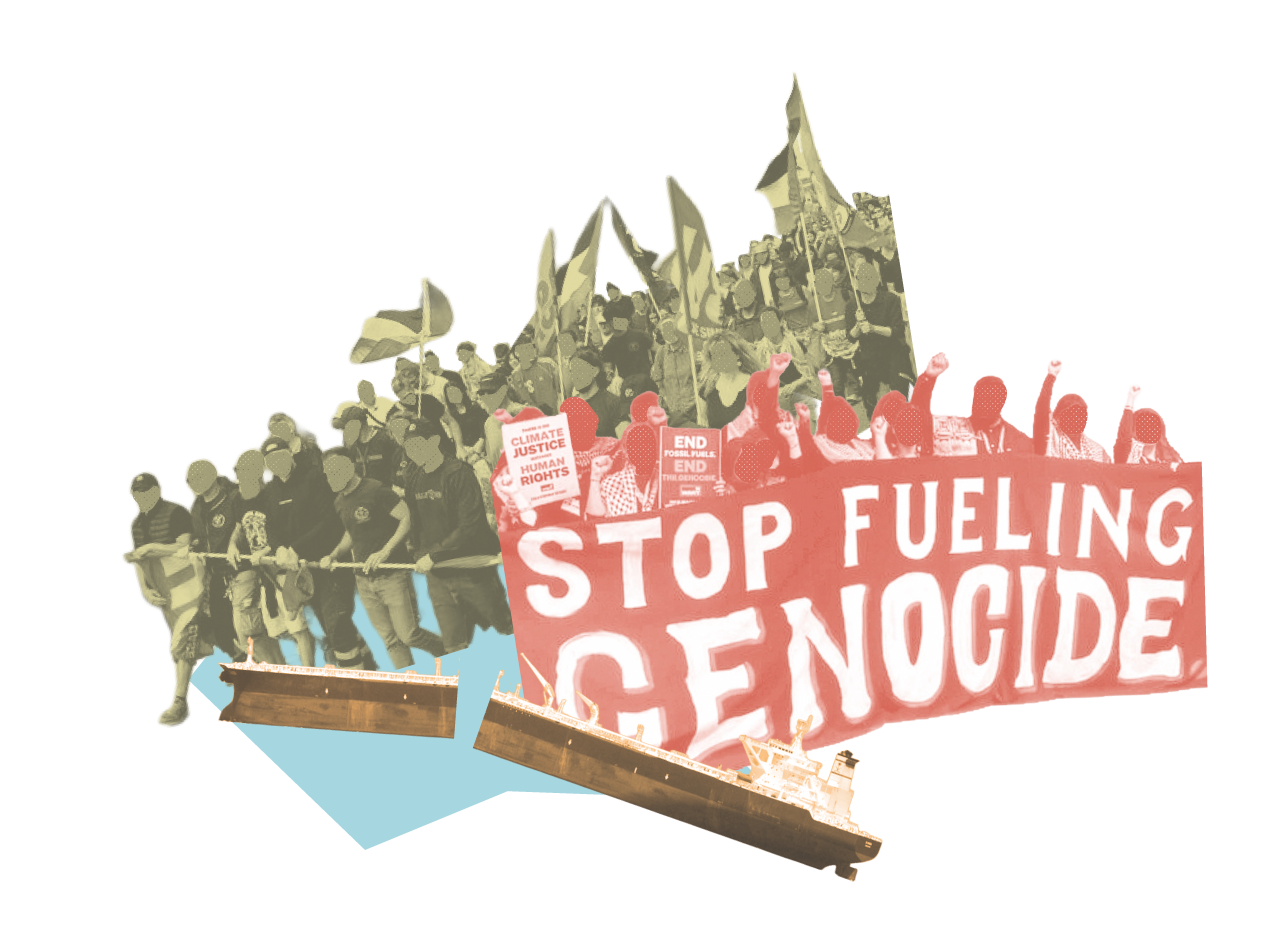
The Israeli colonial regime is entirely reliant on the import of energy supplies to power its genocidal acts.
These energy supply chains criss-cross across the world and oppress at every stage: sacrifice zones, worker exploitation, ecocide and genocide. The working class is made an unwilling part of a war they never chose. But that chain is also where power is built. When communities take back land, miners organise, refinery workers strike, and dockworkers block ships, supply chains are disrupted and systems fall.
FOCUS AREAS
GEEP targets the strategic nodes sustaining Israel's genocide: jet fuel powering military planes, crude oil feeding the war machine, coal sustaining weapons systems, stolen gas filling Israeli coffers, and renewable energy greenwashing genocide. Each focus area follows a crucial energy route and strategises where it can be disrupted.
Türkiye Crude Oil Exports
Türkiye is a significant crude oil supplier to Israel, despite public tensions and rhetorical criticism. The Baku-Tbilisi-Ceyhan pipeline, operated by BP, SOCAR, ENI and others, delivers an estimated 30 to 40 percent of Israel’s crude through the port of Ceyhan, providing Israel with critical energy security and stable fuel supplies the colonial infrastructure of the military and settlements.
South Africa Coal Exports
Despite South Africa’s historic anti-apartheid legacy and its leading role in the ICJ genocide case against Israel, South African coal continues to flow to Israel through the Richards Bay Coal Terminal, sustaining its electricity grid and military infrastructure. These exports power illegal settlements, military bases, and the surveillance systems that enforce apartheid.
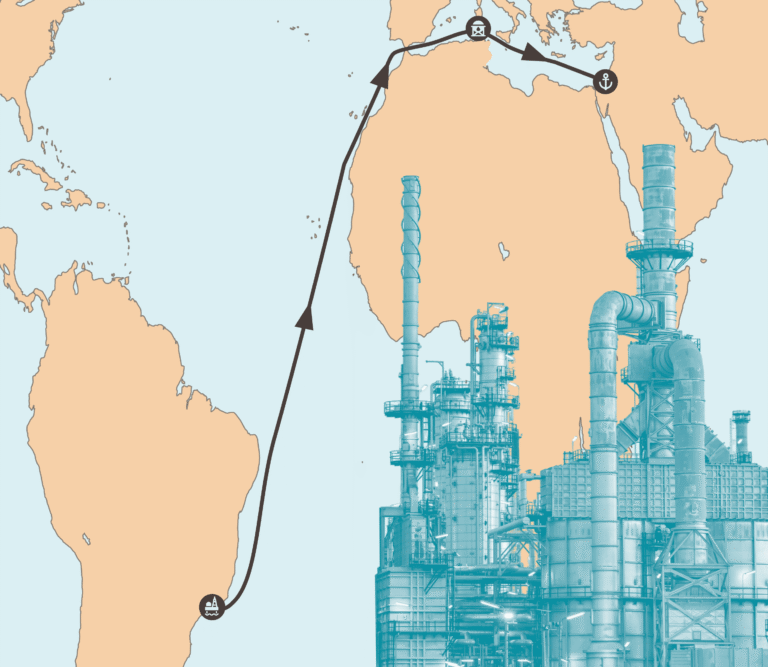
Brazil-Italy-Israel Crude Oil Corridor
Allegedly, under pressure from oil workers and the public, Brazil stopped shipping crude oil directly to Israel in 2025. However, a new route of supplying this energy source to Israel emerged through the operations of companies with long histories of corruption, environmental devastation and Indigenous rights violations.
PARTICIPATE IN THE CHANGE
Everyone can play a role against energy oppression. Disrupting energy flows can be achieved at every node of the supply chain, and by challenging the infrastructure that sustains it. Join workers and communities already taking action. Pressure your bank, your pension fund, your university, your union, your government.
End energy complicity. Energy embargo now.

